GLP-1 food tracker
A GLP-1 food tracker with no made-up goals
Appetite often changes on a GLP-1 medicine, which makes what you do eat and drink matter more. A good GLP-1 food tracker shows your protein and fluids at a glance without handing you targets nobody prescribed. Here's what's worth logging, why, and how Handle keeps it simple.
On this page
In short
- A GLP-1 food tracker records what you eat and drink, including protein and fluid totals, so you and your care team can see how you're eating while your appetite is lower.
- Lower appetite is expected: in Mounjaro's diabetes trials, decreased appetite was reported by 5–11% of people on the medicine versus 1% on placebo, and labels warn that vomiting or diarrhea can cause a loss of fluids that may lead to kidney problems.1,2
- Handle's free food log uses USDA food data, records drinks and fluids, totals protein, and counts strength and cardio sessions separately.
- It never invents a protein, calorie or water target: a target appears only if your clinician set one, and Handle records who set it.
Why food and fluids matter on a GLP-1
GLP-1 medicines are meant to be used alongside a reduced-calorie diet and more physical activity; it's written into the Zepbound label's indication.2 Many people also find they simply want less. In Mounjaro's diabetes trials, decreased appetite was reported by 5–11% of people on the medicine versus 1% on placebo.1 Our guide to food noise covers what GLP-1 studies have found so far.
When you eat less, each meal carries more weight, and it's easy to lose track of how much protein or fluid you're getting. Stomach side effects add a second reason to watch fluids: the Zepbound medication guide says diarrhea, nausea and vomiting can cause a loss of fluids that may lead to kidney problems, and that drinking fluids helps reduce the chance of dehydration.2
A record also gives your care team something concrete.
What a GLP-1 food tracker should record
You don't need to weigh every gram. A rough, honest record is enough to see a pattern.
- What you ate, roughly. Meals and snacks, searched or typed in. Portions can be estimates.
- Your protein total. A daily figure you can glance at, without chasing a number nobody set for you.
- Drinks and fluids. Everything you drink, not just water, and any day you couldn't keep fluids down.
- Strength and cardio, separately. Resistance training and cardio are different, so they shouldn't be merged into one activity number.
- Targets your clinician set. With who set them, so any number you're measured against is a prescription, never a default.
- Days you barely ate. Worth noting for your care team, especially alongside stomach side effects.
Free in Handle
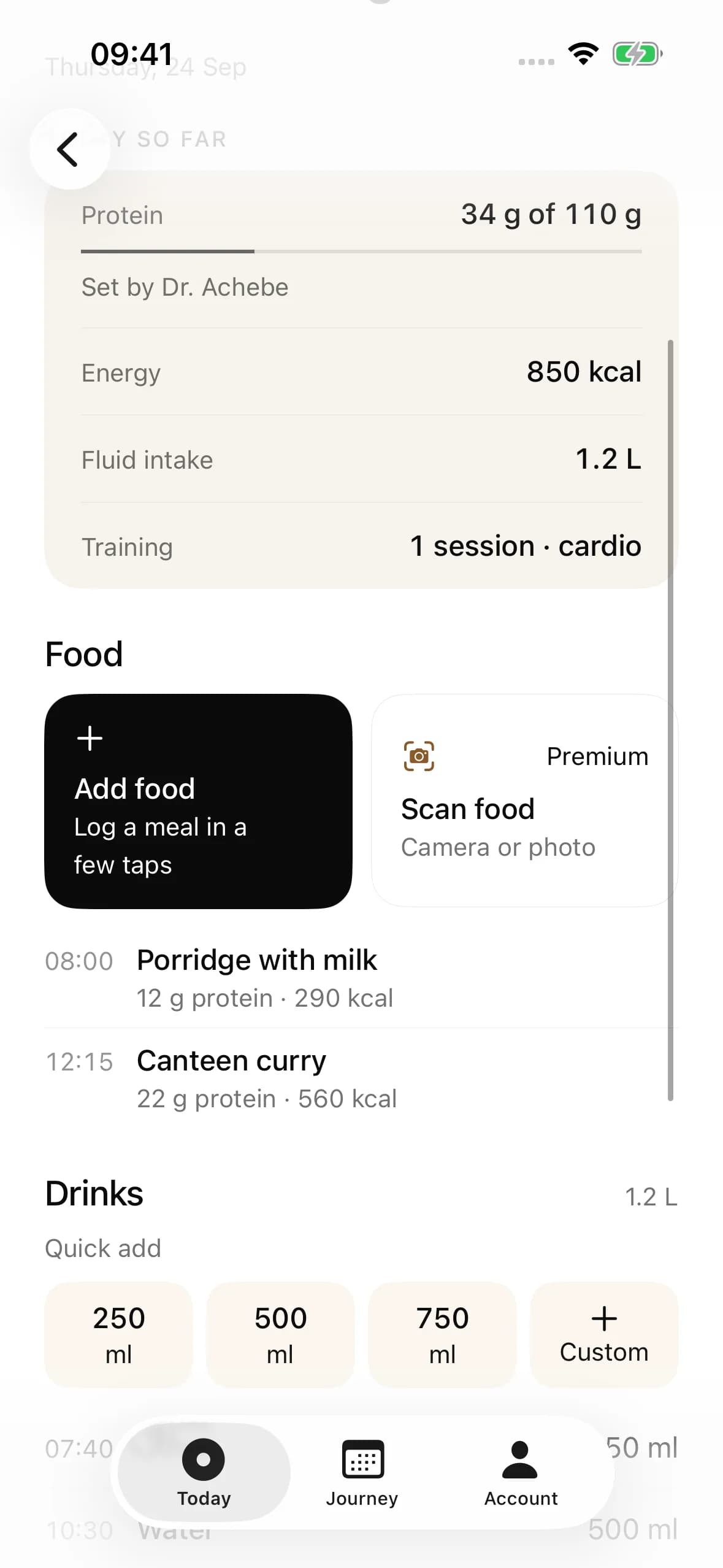
Food, drinks and protein, totalled for the day
Search foods using USDA data or enter your own, log drinks as you go, and see the day's protein and fluid totals at a glance. If nothing's logged yet, Handle says so rather than showing a zero.
- Protein and calories up front; carbs, fat and fiber if you want them
- No rings or percentages unless your clinician set a target
- Your doses and check-ins on the same record
What Handle records, and what it deliberately doesn't do
The restraint is on purpose. A number you're measured against should come from someone who knows your health.
| What Handle records | What it won't do | |
|---|---|---|
| Food | Meals from USDA-based search, or your own entries | Set a calorie goal for you |
| Protein | Daily totals | Invent a protein target |
| Fluids | Drinks and daily fluid totals | Invent a water target |
| Targets | The ones your clinician set, with who set them | Show rings, percentages or "remaining" by default |
| Activity | Strength and cardio sessions, counted separately | Merge them into one number |
| Muscle | Protein and strength sessions, on the record | Estimate your muscle from food, sessions or weight |
| Photo scan (Premium) | An estimate from a meal photo, which you review and edit | Save anything you haven't confirmed |
| Other apps | What you enter yourself | Read data from your phone, watch or other apps |
Protein on a GLP-1: why it's worth a place in your food log
Weight lost on these medicines isn't all fat. The Zepbound and Wegovy labels both say the medicine lowers body weight with greater fat mass loss than lean mass loss.2,3 In a body-composition substudy of the SURMOUNT-1 trial, about 75% of the weight lost was fat and about 25% was lean mass, in both the tirzepatide and placebo groups.5
Lean mass isn't the same thing as muscle: it also includes organs, bone and water.6 That's why Handle never estimates your muscle from protein, sessions or weight. It keeps protein totals and strength sessions on the record for you and your clinician to discuss.
How much protein is right for you is a question for your clinician or a dietitian, not an app. If they give you a number, record it in Handle along with who set it. Our list of questions to ask your doctor about GLP-1 includes this one.
Free in Handle
Strength and cardio, counted separately
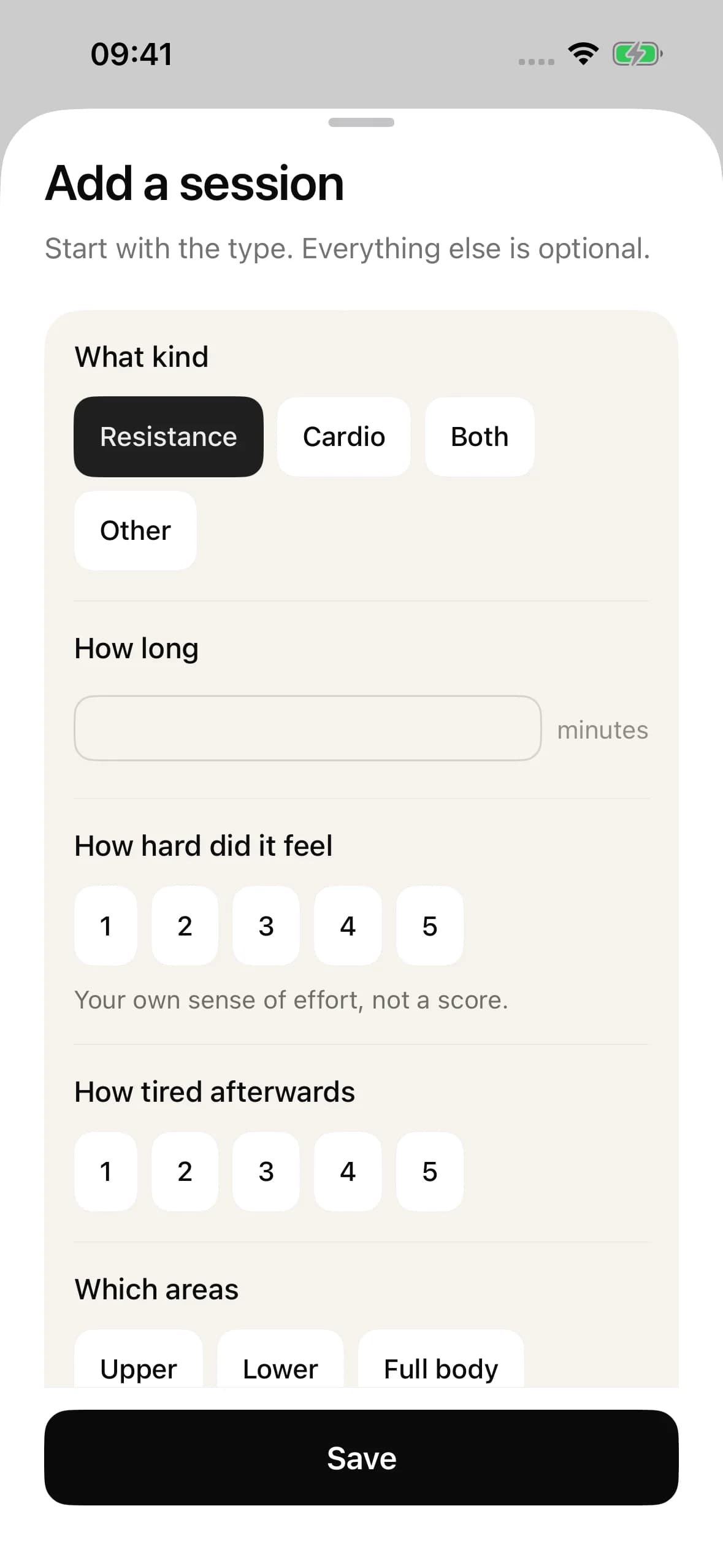
Log a session as resistance, cardio or both. Handle keeps the two counts apart and never merges them into a single activity score.
- A session that's both counts in each
- Drawn on Journey beside your weight and intake
Fluids on rough days
On days with nausea, vomiting or diarrhea, keep an eye on fluids. Log what you drink, and if you switch on the check-in question about keeping fluids down, you'll have a record of the days you couldn't. The Zepbound medication guide asks you to tell your healthcare provider right away about nausea, vomiting or diarrhea that doesn't go away.2 Our GLP-1 side effect tracker guide covers the check-in.
Handle PremiumPremium
Snap a meal, then check the numbers
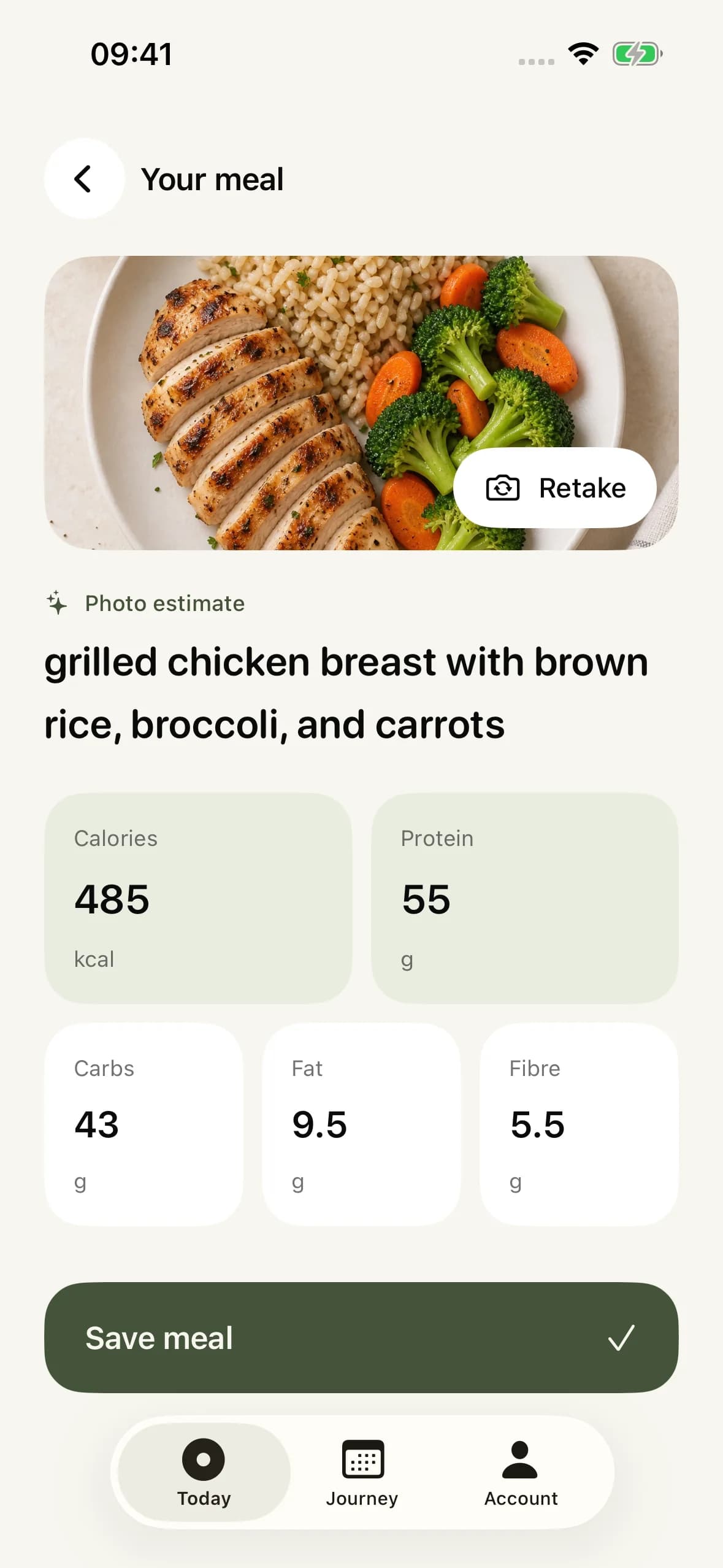
Scan food estimates a meal's nutrients from a photo. You review and edit every figure before anything is saved, so the log stays yours.
- Protein, carbs, fat, fiber and calories estimated
- Nothing saved until you confirm
Premium is an optional subscription in the iPhone app.
Food tracking on Ozempic, Mounjaro, Wegovy or Zepbound
The food log works the same whichever medicine you take, and your doses sit on the same record. Journey draws your intake beside your weight and dose, side by side, without claiming one explains the other. For dose logging with each medicine, see the Ozempic tracker, Mounjaro tracker, Wegovy tracker and Zepbound tracker. For what the guidance says about eating, see what to eat on Mounjaro and what to eat on Ozempic.
Pills add one wrinkle. The Wegovy pill's label says to take it on an empty stomach in the morning with up to 4 ounces of water, then wait at least 30 minutes before eating, drinking or taking other oral medicines; Foundayo's label says it can be taken with or without food.3,4 Neither is in Handle's medicine list yet, so add yours under "Something else" with its name and daily schedule. Food, check-ins and Journey work the same.
Questions people ask
What is the best food tracker for GLP-1 users?+
The one you'll keep using. Look for quick food and drink logging, protein and fluid totals at a glance, strength and cardio kept separate, and no invented goals. Handle does this for free and keeps your doses and symptoms on the same record. Our GLP-1 tracker guide compares the options.
Is there a free GLP-1 food tracker?+
Yes. Handle's food and drink log, protein and fluid totals, activity sessions and Journey charts are free, with no ads. Estimating a meal from a photo is part of Handle Premium. Our free GLP-1 tracker guide lists everything the free plan includes.
How much protein should I eat on a GLP-1?+
That depends on you, so ask your clinician or a dietitian rather than an app. Labels note that weight lost on these medicines includes some lean mass, which makes it a fair question to raise.2 If your clinician sets a target, record it in Handle with who set it. Handle never invents one.
Do I need to count calories on Ozempic or Mounjaro?+
That's a question for your care plan. The labels pair these medicines with diet and exercise, but how closely to track is between you and your care team.1 Handle totals calories for the foods you log, and never sets a calorie goal unless your clinician gave you one.
Why doesn't Handle give me a protein goal?+
Because a number you're measured against should come from someone who knows your health. Handle shows your totals and stops there: no rings, percentages or "remaining" unless your clinician set a target. When they do, you record it with who set it, and it appears alongside your totals.
Can I track water and other drinks?+
Yes. Log water and any other drinks as you go, and Handle shows your fluid total for the day. On days with vomiting or diarrhea that total is worth watching, because labels warn that losing fluids can lead to kidney problems.2
Can I log food with a photo?+
Photo logging is a Handle Premium feature. Scan food estimates a meal's nutrients from a photo, and you review and edit every figure before anything is saved. On the free plan, you search foods using USDA data or enter your own, and the day's totals update as you go.
Does Handle connect to MyFitnessPal or Apple Health?+
No. Handle doesn't read health data from your phone, watch or other apps, so everything in your record is something you entered yourself. If you're weighing up food apps, our MyFitnessPal alternative page compares them for people on GLP-1 medicines.
Sources
- Eli Lilly and Company, via DailyMed (U.S. National Library of Medicine). Mounjaro (tirzepatide) injection — Prescribing Information, effective August 27, 2026.
- Eli Lilly and Company, via DailyMed (U.S. National Library of Medicine). Zepbound (tirzepatide) injection — Prescribing Information and Medication Guide, effective August 28, 2026.
- Novo Nordisk, via DailyMed (U.S. National Library of Medicine). Wegovy (semaglutide) injection and tablets — Prescribing Information, effective June 18, 2026.
- Eli Lilly and Company, via DailyMed (U.S. National Library of Medicine). Foundayo (orforglipron) tablets — Prescribing Information, effective July 29, 2026.
- Look M, et al. Diabetes, Obesity and Metabolism 2025;27(5):2720–2729 (PubMed). Body composition changes during weight reduction with tirzepatide in the SURMOUNT-1 study of adults with obesity or overweight, 2025.
- Neeland IJ, Linge J, Birkenfeld AL. Diabetes, Obesity and Metabolism 2024;26 Suppl 4:16–27 (PubMed). Changes in lean body mass with glucagon-like peptide-1-based therapies and mitigation strategies, 2024.
Written by the Handle team from the sources above, last checked on September 23, 2026. How we write: our editorial policy. Spotted something out of date? Tell us at [email protected].
Handle supports recording and conversations with your care team. It does not diagnose, and it never tells you to start, change, skip or stop a dose. This page is general information, not medical advice. Always follow your prescriber and your medicine's instructions for use.