What to eat on Mounjaro
What to eat on Mounjaro, and who says so
There's no official Mounjaro diet, and the label doesn't list foods to avoid. Advice on what to eat on Mounjaro comes from the NHS, NICE, the British Dietetic Association, Lilly and a 2025 advisory written for clinicians. They agree on the basics and differ on the numbers. Here's what each one says, and what to ask your care team.
On this page
- Is there a Mounjaro diet?
- What to eat on Mounjaro: a food list from the guidance
- Foods to avoid on Mounjaro, or at least go easy on
- What to eat on Mounjaro to avoid nausea
- Protein on Mounjaro: the published figures, and why they differ
- Fluids on Mounjaro: why the numbers don't match
- Constipation: fibre (fiber), fluids and the NHS list
- Diarrhea (diarrhoea): fluids first
- If you have type 2 diabetes
- Questions to ask your clinician or dietitian
- Questions people ask
- Sources
In short
- There's no official Mounjaro diet: NICE recommends tirzepatide for weight management in some adults, "alongside a reduced-calorie diet and increased physical activity", and the NHS says you'll need to eat a healthy, balanced diet while taking it.3,5
- For days you feel sick, Lilly's Zepbound page (Zepbound is the same medicine, tirzepatide) suggests smaller meals, stopping when you feel full, avoiding fatty foods like butter or cheese, and bland foods like toast, crackers or rice.6
- The NHS says it's best to avoid alcohol while using tirzepatide because it can increase nausea and vomiting, and the UK leaflet asks you to drink plenty of fluids to avoid dehydration, without naming an amount.5,1
- Protein figures vary: a 2025 advisory for clinicians lists several, including the general adult allowance of 0.8 g/kg a day and 1.2–1.6 g/kg a day "proposed during active weight reduction", and says there is "still no consensus on the optimal approach"; the British Dietetic Association says you don't need an online protein calculator.11,10
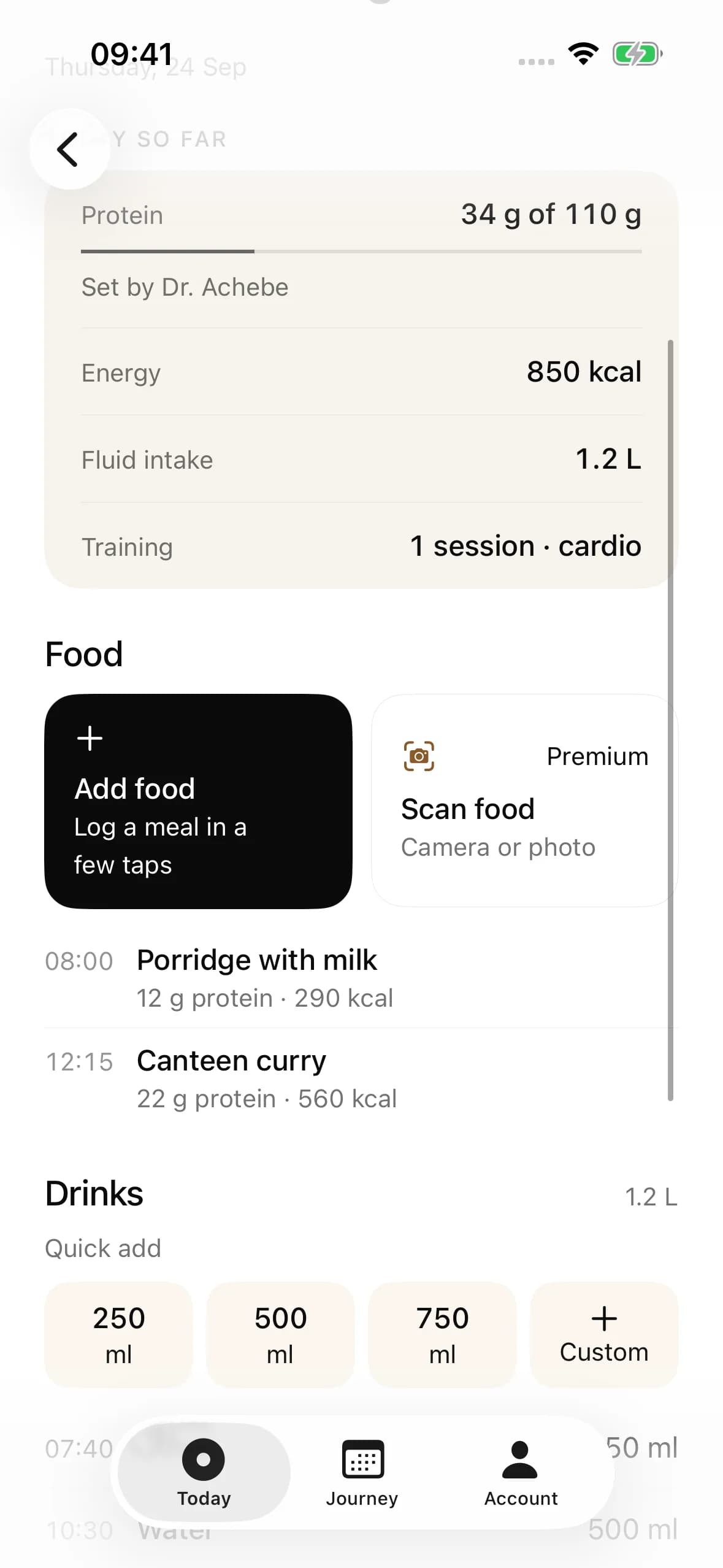
- Your own protein, fluid or calorie target is for your clinician or dietitian to set; Handle's free food log shows your totals and displays a target only when they have set one.
Is there a Mounjaro diet?
Not an official one. Neither the UK leaflet nor the US label lists foods to avoid, and Mounjaro can be injected at any time of day, with or without meals.1,2 The leaflet pairs it with a "reduced-calorie diet and increased physical activity" for weight loss, NICE uses the same words, and the NHS puts it plainly: "You'll need to eat a healthy, balanced diet while taking this medicine."1,3,5
In the US, Mounjaro is approved for type 2 diabetes "as an adjunct to diet and exercise".2 The same medicine is sold there for weight management as Zepbound; see Mounjaro vs Zepbound.
Mounjaro in the UK: support that comes with the jab
If your GP practice in England prescribes Mounjaro for weight management, NHS England says structured wraparound care is "a required treatment component". Its behavioural support covers balanced nutrition, how eating habits affect stomach side effects, and body composition, "not just weight"; the national programme runs over 9 months.4 Such a programme "does not provide individualised medical advice or management of medication", so anything specific to you, including your medicine, stays with your prescriber.4
What to eat on Mounjaro: a food list from the guidance
The nearest thing to a food list is a table of "key dietary recommendations" in the 2025 advisory on GLP-1 medicines. It was written for clinicians treating obesity, not as a menu, and it isn't specific to Mounjaro.11
Encourage
Advisory, Table 6
- Fruit, such as berries, apples, citrus fruits, bananas, grapes and avocado
- Vegetables, such as broccoli, leafy greens, tomatoes, carrots, peas and squashes
- Whole grains, such as oats, quinoa, brown rice and whole-grain bread, cereal and pasta
- Dairy, such as yogurt, milk and cheese
- Lean proteins such as poultry, fish and seafood, and eggs
- Nuts and seeds, and plant oils such as olive, canola and avocado oil
- Ginger or peppermint tea
Minimize or avoid
Advisory, Table 6
- Refined carbohydrates: processed grains, flours and added sugars
- Sugar-sweetened drinks
- Red and processed meats
- Most fast food
- Sweets and savory snacks
The same table favors regular, small meals at consistent times and minimal alcohol.11 The BDA's guide for the public is simpler: "Add protein, carbohydrates, and some vegetables or fruit to your plate at every meal."10
Foods to avoid on Mounjaro, or at least go easy on
The label bans no food. These are the foods and drinks the guidance names, mostly to settle an unsettled stomach, and who names them.
| Go easy on | What the guidance says, and who says it |
|---|---|
| Fatty, fried or greasy food | Lilly, for nausea: avoid fatty foods like butter or cheese.6 NHS: no hot, fried or greasy food when you feel sick.7 BDA: high-fat and spicy foods can upset your gut.10 |
| Big meals | Lilly, for nausea: try splitting 3 daily meals into 4 or more smaller ones, and stop eating when you feel full.6 Advisory: vomiting is more likely with large meals.11 |
| Alcohol | NHS: best avoided while using tirzepatide, as it can increase feeling or being sick.5 BDA: limit or avoid.10 |
| Sugary, fizzy and high-caffeine drinks | BDA: limit or avoid sugary foods and drinks and fizzy drinks like cola or lemonade; limit high-caffeine drinks if they worsen nausea, reflux or sleep.10 NHS: fruit juice and fizzy drinks can make diarrhoea worse.9 |
| Strong smells, and big drinks with meals | NHS: when you feel sick, don't eat or cook strong-smelling food or have a large drink with meals.7 |
| Dairy, on diarrhea days | Lilly: limit dairy products when you have diarrhea.6 For everyday eating, the advisory and the BDA include dairy.11,10 |
If you have diabetes and can get low blood sugar, your care team's plan for treating a low comes first; nothing in this table overrides it. The BDA lists burping with a bad smell among the side effects, but none of these sources links it to particular foods; our sulfur burps guide covers what's known.10
What to eat on Mounjaro to avoid nausea
Nausea is among Mounjaro's most common side effects, and the label says most reports of nausea, vomiting and diarrhea came while the dose was being stepped up and decreased over time.2 Lilly and the NHS offer overlapping tips:
Lilly, on its Zepbound page6
If you feel sick, talk to your doctor; in the meantime, it may help to:
- Eat smaller meals: try splitting 3 daily meals into 4 or more smaller ones
- Stop eating when you feel full
- Avoid fatty foods like butter or cheese
- Try bland foods like toast, crackers or rice
The NHS, on feeling sick7
Things that may help:
- Get plenty of fresh air
- Take regular sips of a cold drink
- Drink ginger or peppermint tea, or eat ginger biscuits
- Eat smaller, more frequent meals
- Don't eat too quickly or lie down soon after eating
The sources agree on small meals but not on how many: Lilly suggests four or more a day, while the BDA suggests three small meals, eating the protein first if a meal feels too big.6,10 The advisory notes that nausea often comes in the morning or after long gaps without food.11 If nausea, vomiting or diarrhea doesn't go away, tell your healthcare provider right away.2 More in Mounjaro side effects.
Protein on Mounjaro: the published figures, and why they differ
Protein comes up because appetite drops. The advisory says it "should be a priority to help preserve muscle mass and bone density", suggests eating protein-rich foods first in a meal, and names lower-volume options such as fish, eggs, Greek yogurt, cottage cheese, and nuts and seeds.11 What it doesn't give is one number.
| Figure | What the source actually says |
|---|---|
| 0.8 g per kg of body weight a day | The recommended daily allowance for the general adult population, which the advisory notes is under review.11 |
| 1.2–1.6 g/kg a day | "Proposed during active weight reduction". The advisory adds that it's unclear whether to base it on actual, adjusted or ideal body weight, or on fat-free mass.11 |
| 1.5 g per kg of lean body mass | "Considered more accurate but requires body composition data."11 |
| 80–120 g a day | A fixed alternative that "may enhance adherence".11 |
| No number | The BDA: "Everyone has different protein needs." It suggests protein-rich foods at your three meals, with no weighing and no online protein calculator.10 |
In the advisory's own words, "there is still no consensus on the optimal approach."11
The advisory's figures were written for clinicians planning with a patient, not for readers to pick from, and later in 2025 the American Journal of Clinical Nutrition published a letter questioning its evidence base, titled "Calling guidance evidence-based when it is not is against the ethos of science".12 The BDA's advice is simpler: to know exactly how much protein you need, talk to a registered dietitian.10 Ask your clinician or dietitian what's right for you; Handle records the figure they give you, with who set it.
Protein works alongside strength training
The advisory is blunt: more protein alone "is likely inadequate" to preserve muscle without structured strength training. It recommends pairing GLP-1 medicines with a structured exercise program, aiming for strength training at least three times a week plus at least 150 minutes a week of moderate aerobic exercise, "customized to match the individual's fitness level and physical capacity".11 NHS England calls strength-focused activity "a cornerstone of health, rather than weight loss alone".4 Ask your care team what's safe for you to start with.
Fluids on Mounjaro: why the numbers don't match
Every source agrees fluids matter, especially when you're being sick or have diarrhea: the UK leaflet says losing fluids may lead to a decrease in kidney function, and that "it is important to avoid dehydration by drinking plenty of fluids".1 Neither it nor the US Medication Guide gives an amount.1,2 The figures that exist were written for different situations:
| Source | What it says | Written for |
|---|---|---|
| BDA guide | 1.5 to 2 litres a day, about 8 glasses, and more when exercising or on a hot day | UK adults on medicines for obesity, especially to help prevent constipation10 |
| Lilly's Zepbound page | At least 8–10 glasses of clear fluids daily, with water generally preferred | Days with diarrhea6 |
| NHS diarrhoea and vomiting page | "Lots of fluids", in small sips if you feel sick, with no amount | Days with diarrhoea or vomiting9 |
None of these is a target for you. If your clinician or dietitian sets one, you can record it in Handle with who set it.
Free in Handle
Your totals, and only the targets your clinician set
Search foods using USDA data or add your own, log drinks as you go, and see the day's protein, calories and fluids. There are no rings, percentages or "remaining" counts, and a target appears only if a clinician or dietitian gave you one, which you record with who set it. Our GLP-1 food tracker guide explains why.
- Protein, calorie and fluid totals for the day
- Targets appear only when your clinician set them
- Resistance and cardio sessions counted separately, never merged
- Your Mounjaro doses on the same record
Constipation: fibre (fiber), fluids and the NHS list
Constipation is one of Mounjaro's most common side effects.2 The NHS suggests fruits that contain sorbitol, such as apples, apricots, grapes (and raisins), raspberries and strawberries; plenty of water and other fluids, and avoiding alcohol; increasing fibre gradually; adding wheat bran, oats or linseed; and a daily walk or run.8 The BDA names wholegrain bread, brown rice and wholewheat pasta as fibre-rich choices, and the advisory mentions prunes and other dried fruit, added gradually.10,11
One wrinkle: for nausea in the first few days of treatment, the advisory suggests avoiding high-fibre foods, so ask your care team what fits your stage.11 See a GP if constipation isn't getting better with treatment or you have tummy pain, the NHS says.8
Diarrhea (diarrhoea): fluids first
"The most important thing is to have lots of fluids to avoid dehydration," says the NHS: water or squash, in small sips if you feel sick, and food when you feel able to, perhaps avoiding fatty or spicy food, but not fruit juice or fizzy drinks.9 Lilly adds limiting dairy and trying bland foods like chicken broth, rice or carrots, and the advisory says avoiding large or high-fat meals can help.6,11
Signs of dehydration include dark, smelly pee or peeing less than usual; the NHS suggests seeing a pharmacist if you notice them, and calling 111 if you keep being sick and can't keep fluid down, or have had diarrhoea for more than 7 days or vomiting for more than 2 days.9
Free in Handle
Note the rough days as they happen
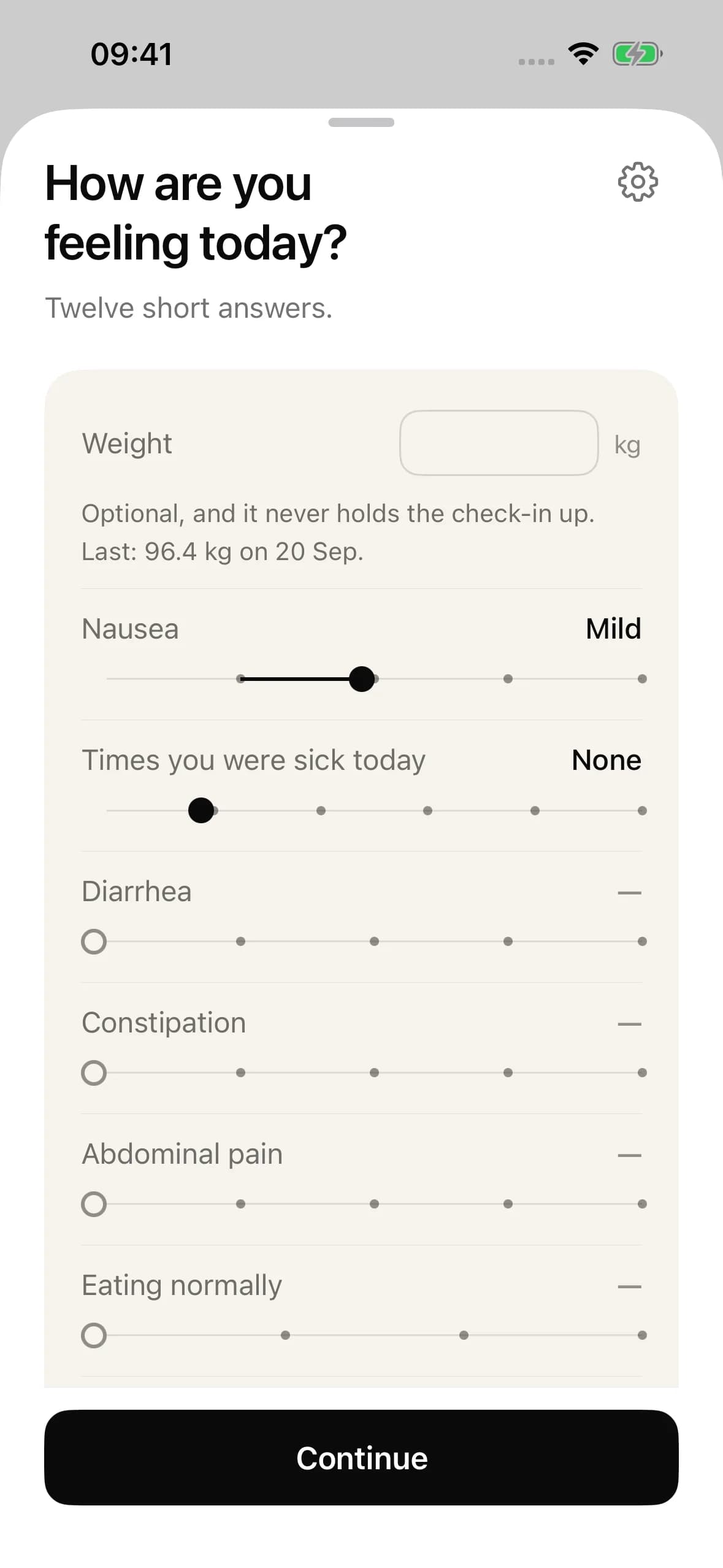
The daily check-in asks about nausea every day, plus the symptoms you choose, such as constipation, diarrhea or heartburn, and stays the same short card whatever you answer. It sits on the same record as your food, so both are there when you talk to your clinician. More in the GLP-1 side effect tracker guide.
Handle records what you report. It doesn't diagnose, and it isn't a monitoring or emergency service.
- Nausea every day, plus the symptoms you switch on
- Missed a day? Add it later, up to 30 days back
- A private one-line note per day that never goes on a report
If you have type 2 diabetes
In the label's 40-week trials, glucose readings below 54 mg/dL were reported by 0% of people taking Mounjaro alone (1% on placebo), and by 14–19% when it was added to basal insulin (13% on placebo).2 The Medication Guide says your risk of low blood sugar may be higher with a sulfonylurea or insulin, and asks you to talk to your healthcare provider about how to manage it before you start; the UK leaflet flags the same medicines.2,1
If you're eating much less, or wondering about alcohol, ask your diabetes team how that fits with your other medicines. Our guide to eating on Ozempic covers meals, alcohol and low blood sugar in more depth.
Questions to ask your clinician or dietitian
Our GLP-1 doctor appointment guide has more, and the Mounjaro tracker guide shows how to keep your record in one place.
- Is there a protein, fluid or calorie target you'd like me to aim for?
- Which foods should I go easy on while I get used to Mounjaro?
- What should I do on days when I can't keep fluids down?
- Does anything change because I have diabetes, or take insulin or a sulfonylurea?
- What strength training is safe for me to start with?
Questions people ask
What foods should you avoid on Mounjaro?+
The label doesn't ban any food. The guidance mostly names foods that can unsettle your stomach: fatty, fried or greasy food, big meals, strong smells, and sugary or fizzy drinks, according to Lilly, the NHS and the BDA.6,7,10 The NHS also says it's best to avoid alcohol while using tirzepatide, because it can make feeling or being sick worse.5
What should I eat on Mounjaro to stop feeling sick?+
Lilly's Zepbound page suggests smaller meals, stopping when you feel full, avoiding fatty foods like butter or cheese, and bland foods like toast, crackers or rice.6 The NHS adds regular sips of a cold drink, ginger or peppermint tea, eating slowly and not lying down soon after eating.7 If nausea, vomiting or diarrhea doesn't go away, tell your healthcare provider right away.2
What should I eat on Mounjaro injection day?+
Nothing special: Mounjaro can be injected at any time of day, with or without meals, and neither the leaflet nor the label sets out an injection-day diet.1,2 The everyday guidance still applies, from small meals to enough fluids. If some days feel harder than others, note it for your prescriber. Our Mounjaro injection sites guide covers the injection itself.
How much protein should I eat on Mounjaro?+
There isn't one agreed answer. A 2025 advisory for clinicians lists several figures, including the general adult allowance of 0.8 g per kg a day and 1.2–1.6 g per kg a day "proposed during active weight reduction", and says there is "still no consensus on the optimal approach"; the BDA says you don't need an online protein calculator.11,10 Ask your clinician or dietitian what's right for you. If they set a target, Handle records it with who set it.
Can I drink alcohol on Mounjaro?+
The NHS says it's best to avoid alcohol while using tirzepatide, because it can increase side effects like feeling or being sick.5 The BDA says to limit or avoid it, and the 2025 advisory warns it may make nausea and reflux worse.10,11 If you have diabetes and take insulin or a sulfonylurea, ask your care team how alcohol affects your risk of low blood sugar.
What should I eat on Mounjaro if I have diarrhoea?+
The NHS says the most important thing is plenty of fluids, in small sips if you feel sick, and food when you feel able to, perhaps avoiding fatty or spicy food; fruit juice and fizzy drinks can make diarrhoea worse.9 Lilly's tips add limiting dairy and bland foods like chicken broth, rice or carrots.6 Call 111 if you keep being sick and can't keep fluid down, or have had diarrhoea for more than 7 days.9
What can I eat on Mounjaro when I'm not hungry?+
The BDA says to keep eating and drinking regularly, avoiding long gaps even if portions are smaller.10 The advisory says smoothies, protein drinks, cottage cheese and soups are often more appealing than heavier food, and that a reminder to eat can help.11 If you feel dizzy or tired, lose hair or feel low because you're eating so little, the BDA asks you to talk to your prescriber or a dietitian.10
Is what to eat on Zepbound different from Mounjaro?+
Not really. Zepbound and Mounjaro are the same medicine, tirzepatide, under two US brand names, and Lilly's tips for nausea and diarrhea sit on its Zepbound page.2,6 In the UK, Mounjaro is used for both type 2 diabetes and weight loss, so the NHS and NICE guidance here applies to it.1,3 See Zepbound side effects and Mounjaro vs Zepbound.
Sources
- Eli Lilly and Company, via the electronic medicines compendium (emc), UK. Mounjaro KwikPen 2.5mg solution for injection in pre-filled pen — Patient Information Leaflet, last revised August 2026.
- Eli Lilly and Company, via DailyMed (U.S. National Library of Medicine). Mounjaro (tirzepatide) injection — Prescribing Information and Medication Guide, effective August 27, 2026.
- National Institute for Health and Care Excellence (NICE). Tirzepatide for managing overweight and obesity (TA1026), published December 23, 2024, updated September 1, 2025.
- NHS England. Tirzepatide (Mounjaro) in primary care for weight management: information on wraparound care, January 5, 2026.
- NHS. Tirzepatide: a medicine to manage type 2 diabetes and treat obesity, last reviewed May 15, 2026.
- Eli Lilly and Company, zepbound.lilly.com (US). Managing Possible Side Effects | Zepbound (tirzepatide), May 2026 (CMAT-26400).
- NHS. Feeling sick (nausea), last reviewed November 17, 2023.
- NHS. Constipation, last reviewed October 26, 2023.
- NHS. Diarrhoea and vomiting, last reviewed December 21, 2023.
- British Dietetic Association, Obesity Specialist Group. The BDA says Novo Nordisk provided a grant and Eli Lilly sponsorship toward its costs, with no input into its content. Medications for obesity: A guide to eating and living well, February 2026.
- Mozaffarian D, et al. Obesity (Silver Spring) 2025;33(8):1475–1503; also published in The American Journal of Clinical Nutrition. Nutritional priorities to support GLP-1 therapy for obesity: A joint Advisory from the American College of Lifestyle Medicine, the American Society for Nutrition, the Obesity Medicine Association, and The Obesity Society, May 30, 2025.
- Dhurandhar EJ, et al. Letter, The American Journal of Clinical Nutrition 2025;122(5):1528–1530, followed by the advisory authors' reply. Calling guidance evidence-based when it is not is against the ethos of science, 2025.
Written by the Handle team from the sources above, last checked on September 24, 2026. How we write: our editorial policy. Spotted something out of date? Tell us at [email protected].
Handle supports recording and conversations with your care team. It does not diagnose, and it never tells you to start, change, skip or stop a dose. This page is general information, not medical advice. Always follow your prescriber and your medicine's instructions for use.